
Carbon Nanotube Synthesis
Growth and Characterization
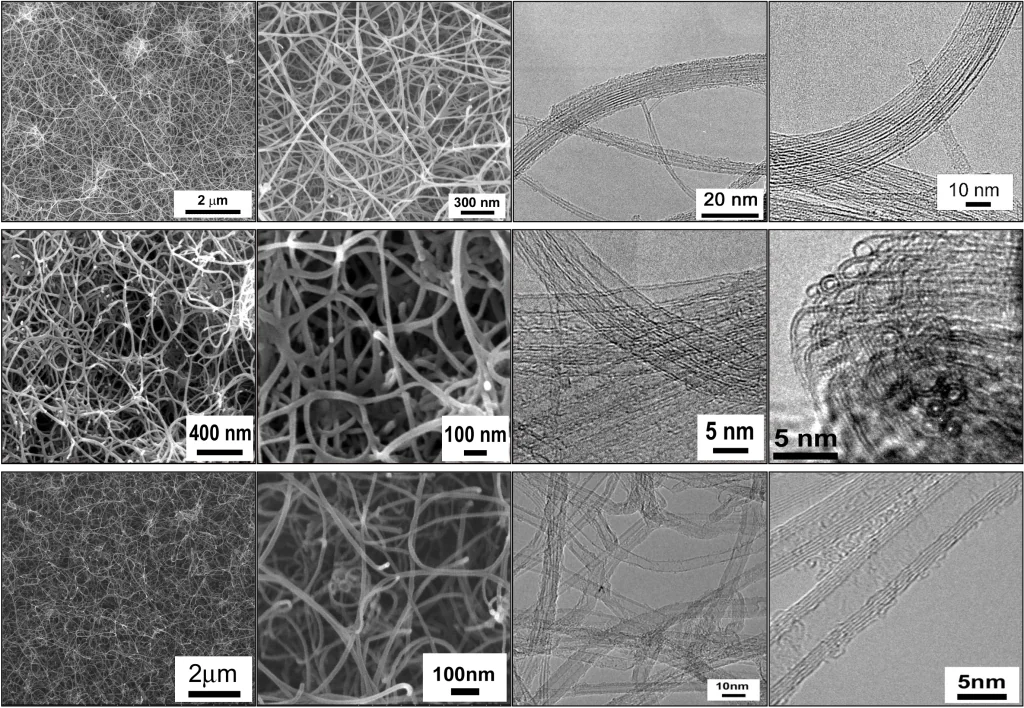
Carbon nanotubes (CNTs) combine outstanding electrical conductivity, mechanical strength and sharp, high-aspect-ratio tips. We grow high-quality CNTs by catalytic chemical vapor deposition and tailor their wall number, alignment and density as the starting material for our field electron emitters.
- Thermal CVD growth of vertically aligned CNTs
- Single-, double- and multi-walled CNT synthesis
- Control of CNT density and alignment
- Structural analysis by SEM and TEM
Cold Cathode X-ray Source
CNT Field Electron Emitters
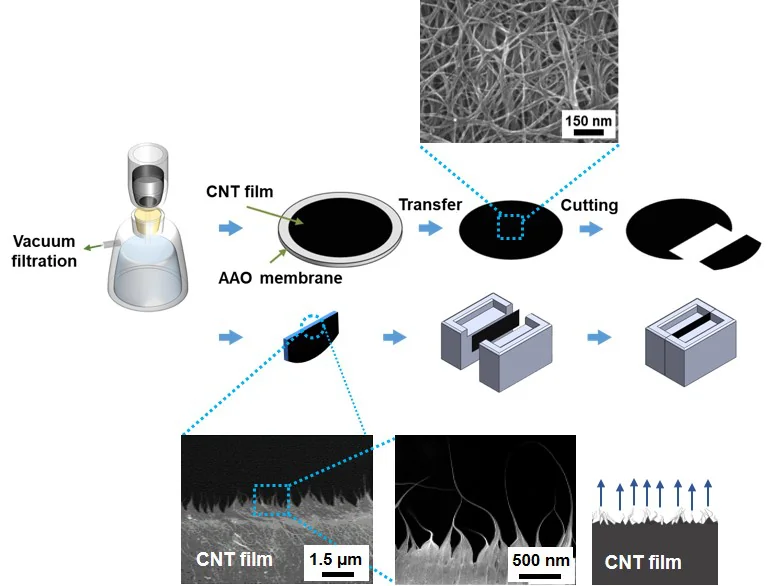
Our X-ray source is a carbon nanotube field emitter that releases electrons at room temperature under an applied electric field. In free-standing CNT films, densely packed CNT bundles align vertically at the film edge, delivering high emission current with long-term stability under high voltage.
Why cold cathode?
- Hot cathode
- Tungsten filament heated to about 2000 °C: slow response, unnecessary exposure and high power consumption
- CNT cold cathode
- Room-temperature emission: instant on/off, precise dose control, low heat and power
- Vacuum-filtered, free-standing CNT film emitters
- Densification for emission stability
- Paste emitters with graphite binders and nanoparticle fillers
- Diode and triode field emission characterization
Ceramic Cold Cathode X-ray Tubes
Compact Digital X-ray Tubes
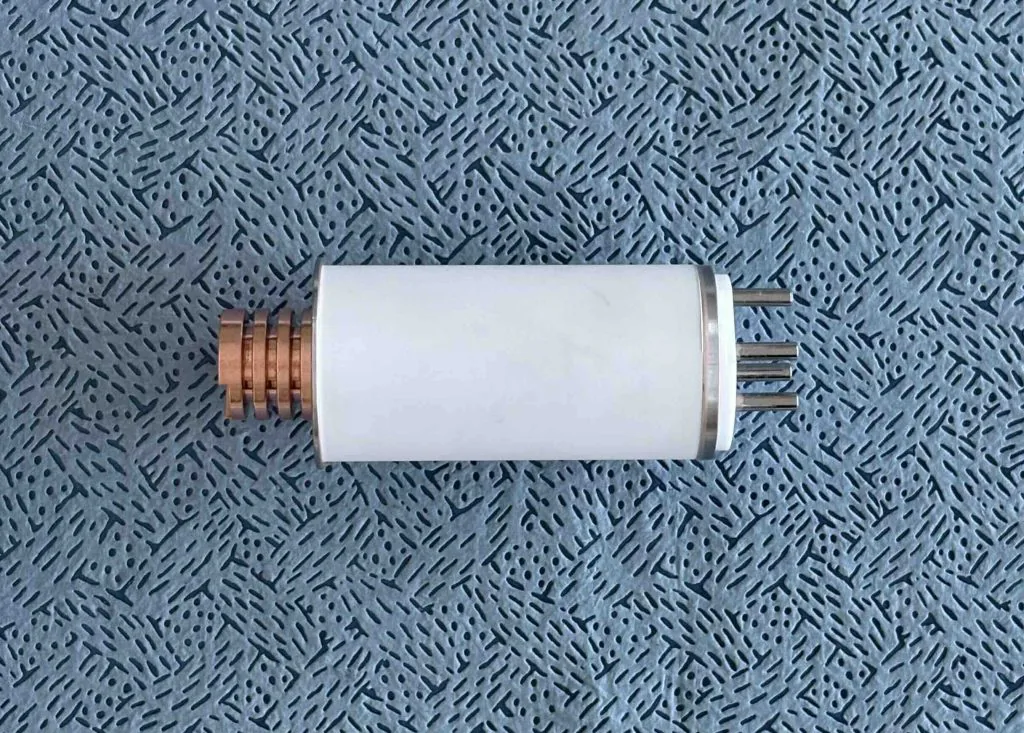
We build complete X-ray tubes around our CNT emitters, moving from glass to compact ceramic envelopes. Our work covers the core tube components, vacuum sealing and digital pulse-driven operation that cuts unnecessary exposure and power use, making medical and industrial X-ray systems practical.
- Small, Smart, Strong
- In-house core component design and vacuum sealing
- Digital pulse operation with fast switching
- High current and long lifetime
Applications
- Portable & Mobile X-ray
- Fluoroscopy
- Dental & Medical CBCT
- Veterinary Imaging
- Security Screening
- Non-Destructive Testing
Graphene
Synthesis and Electronic Applications
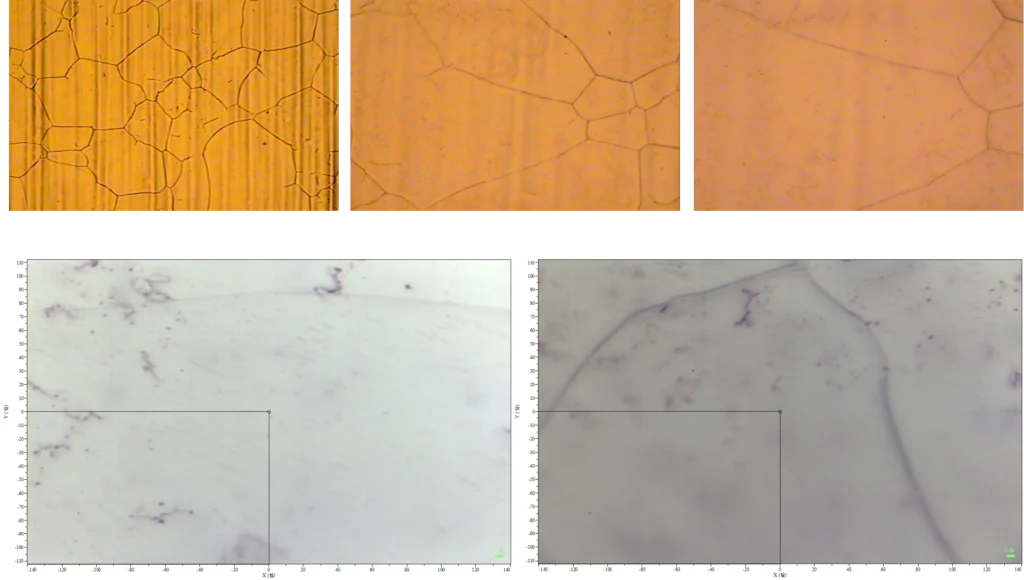
Graphene is a single atomic layer of carbon atoms arranged in a hexagonal lattice. We synthesize graphene by chemical vapor deposition, tune its electronic and magnetic properties by doping, and apply it as electrodes in flexible and wearable electronic devices.
- PECVD growth of bilayer graphene
- Manganese and manganese-oxide doping for bandgap and magnetic control
- Exfoliated graphene / conducting polymer hybrid electrodes
- All-graphene electrodes for wearable transistors
From Lab to Industry
LMX Co., Ltd.
LMX Co., Ltd. (formerly LuminaX), founded in 2022 as a Korea University spin-off led by Prof. Cheol Jin Lee, is commercializing our CNT cold cathode X-ray tubes for medical, dental, veterinary, security screening and non-destructive testing applications.
Visit lmxtube.com ↗